No products in the cart.


Smart Homes Start Here: Shop Our Automation Collection!
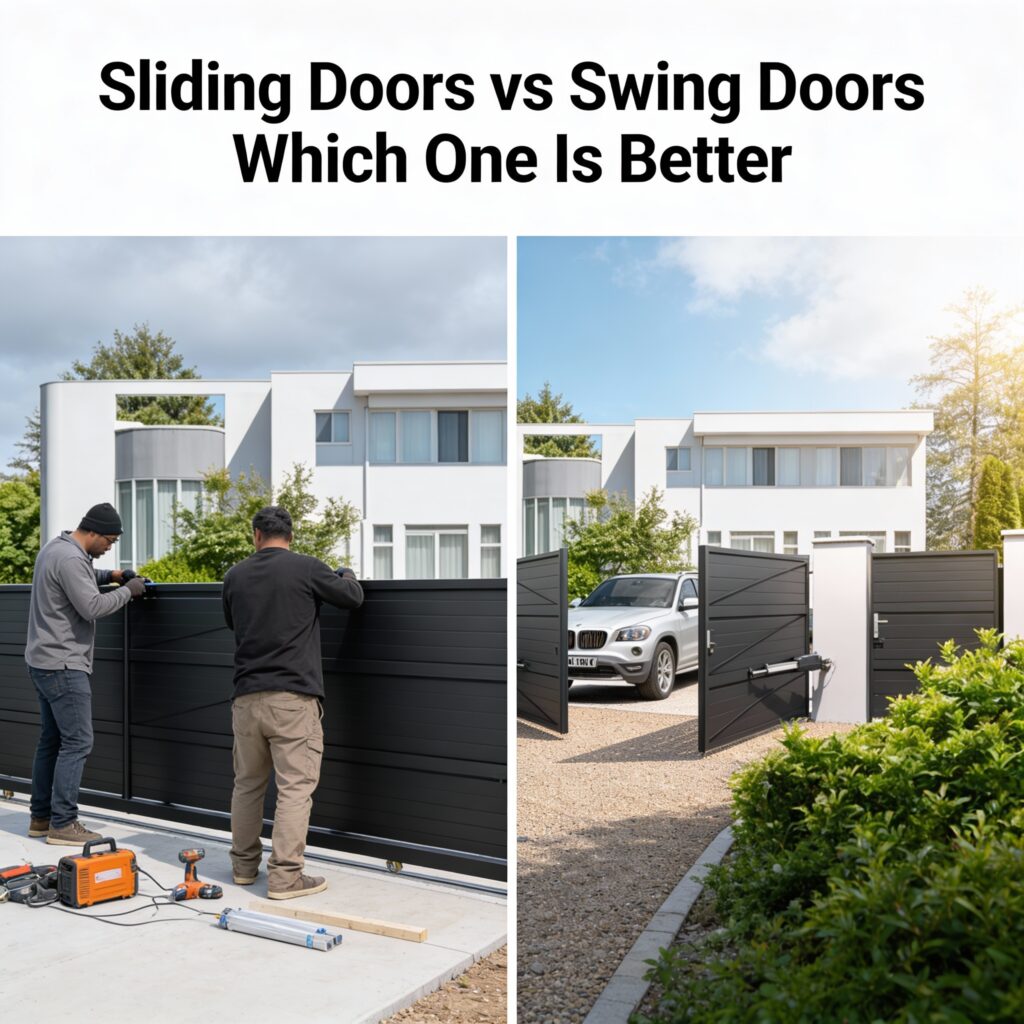
When choosing the right door for your home or office, the decision between sliding doors vs swing doors plays a pivotal role. Both types of doors come with unique features and advantages, which vary depending on your space, design preferences, and practical needs. In Oman, where architectural styles range from traditional to modern, it’s essential to understand which door type best suits your needs.
In this blog, we will dive deep into the differences between sliding doors vs swing doors, highlighting their benefits, ideal use cases, and helping you decide which one is the better option for your space.
Sliding doors vs swing doors: The former is often associated with modern, sleek designs. Sliding doors are typically large panels that slide horizontally on tracks. This design allows them to open and close without requiring the space needed for a swinging motion, making them ideal for tight or compact areas.
In contrast to sliding doors, swing doors are hinged and open in or out. These traditional doors are a staple in many residential and commercial buildings, and their design is incredibly versatile, fitting into various aesthetic styles.
To make it easier for you to compare the two types, we have summarized the main differences between sliding doors vs swing doors in the table below:
| Feature | Sliding Doors | Swing Doors |
|---|---|---|
| Space Efficiency | Saves space, as it doesn’t require clearance for swinging | Requires space to swing open fully |
| Design | Modern, sleek design for minimalist interiors | Traditional design with classic appeal |
| Maintenance | Regular track cleaning required | Occasional hinge lubrication needed |
| Opening Mechanism | Moves horizontally on tracks | Opens inwards or outwards on hinges |
| Energy Efficiency | Often more energy-efficient with double glazing | Can be energy-efficient but less common with double glazing |
| Ideal Use Cases | Patios, balconies, closets, small rooms | Main entrances, large rooms, kitchens |
| Security | May have vulnerabilities in tracks | Generally more secure due to sturdy frames |
| Natural Light | Maximizes natural light due to large glass panels | Varies depending on design and materials |
When it comes to saving space, sliding doors vs swing doors favors sliding doors. They do not require additional space for swinging open, making them perfect for smaller rooms or narrow hallways. Swing doors, on the other hand, need ample clearance to function effectively.
For a modern look, sliding doors are the go-to choice. They align with minimalist or contemporary interior designs and are ideal for urban homes in Oman. Swing doors, with their more traditional design, complement classic or rustic interiors, adding a sense of elegance and charm.
Both sliding doors vs swing doors require some level of maintenance. However, sliding doors often need more attention due to the tracks, which may accumulate dust or debris. Swing doors require occasional lubrication on the hinges, making them generally easier to maintain.
While swing doors tend to be more robust and secure due to their solid construction, sliding doors can also be highly secure with multiple locking mechanisms. However, the tracks in sliding doors may pose security concerns if not properly maintained.
For homes in Oman, sliding doors are often the more energy-efficient option, especially those with double glazing. Swing doors, while potentially energy-efficient, are less commonly equipped with advanced insulation technology.
When comparing sliding doors vs swing doors, your decision should depend on your space requirements, aesthetic preferences, and functionality needs. Sliding doors are perfect for modern, space-efficient designs, while swing doors offer a traditional, elegant touch for larger spaces. Both options have their advantages, and by carefully considering your home or office needs, you can choose the best door solution for your space.